Three books tracing a single vision: salvation as accomplished reality, death as a defeated power, and life as the practice of love when belonging is a settled matter.
The Restorative Fulfillment Series asks what remains when the Bible is read beyond inherited certainties, and when acceptance is no longer governed by belief or performance.
Death’s Defeat
Decoding Death supplies the biblical and eschatological architecture: death was the enemy, its reign belonged to the Adamic and old-covenant order, and its destruction was accomplished rather than indefinitely postponed.
Faith’s Role
Saving Claude establishes that faith is participation in a reality Christ has already accomplished, not the mechanism by which we persuade God to include us.
The Life That Follows
Decoding Dogma explores what life looks like once belonging is no longer conditional: maturity, responsibility, love, discernment, and participation without religious leverage.
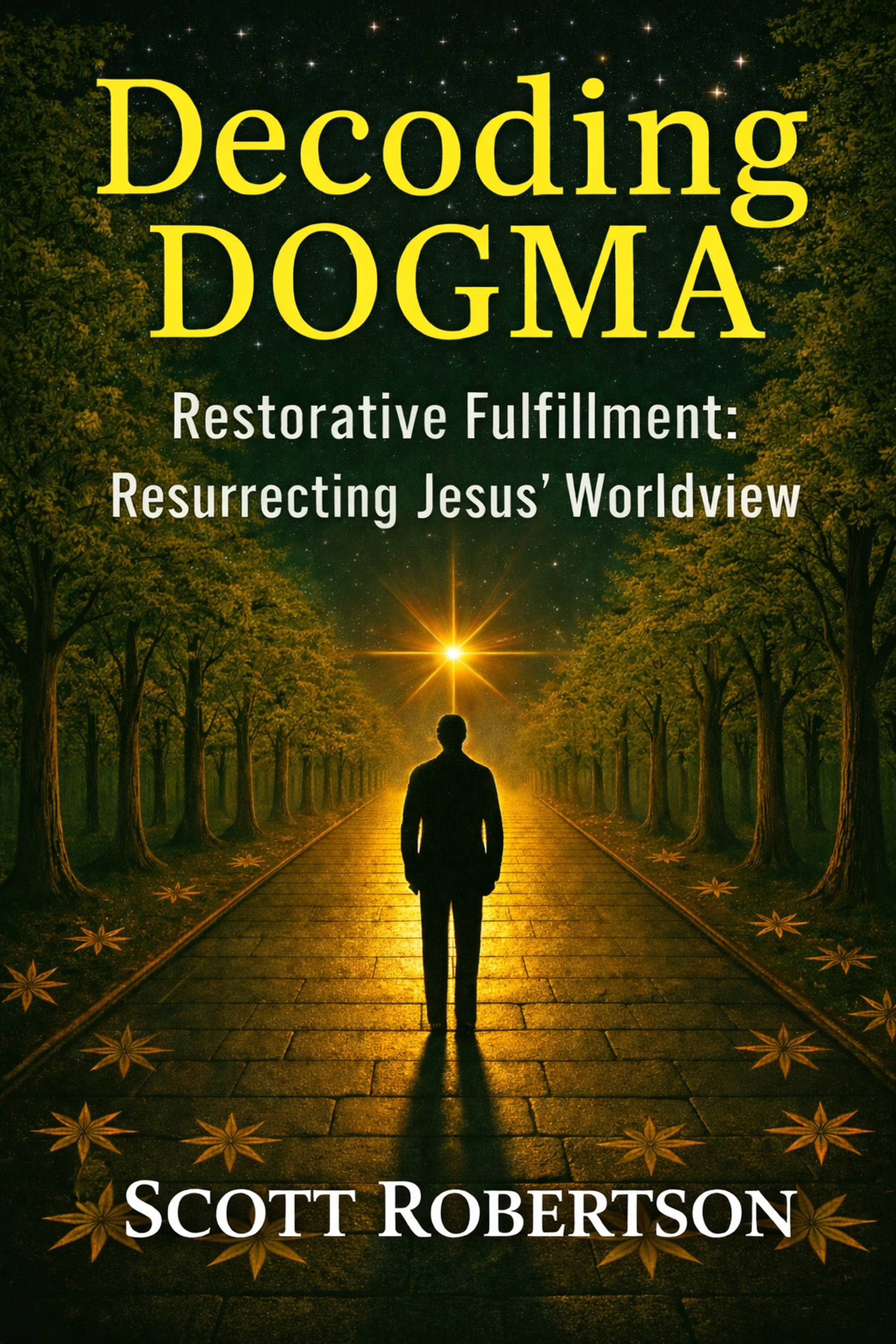
Decoding Dogma explores how Jesus’ vision of humanity transforms the way we understand ourselves, relate to others, exercise responsibility, and live in a world where we are freed from the instinct to protect and perform.
This book begins with lived experience. If salvation is secure, if death has been defeated, if judgment is restorative, if belonging is not earned, then what kind of life begins to appear?
Decoding Dogma explores the collapse of conditional faith and the reorientation that follows. It asks what happens to responsibility when threat is removed, what kind of person emerges when performance no longer secures standing, and what happens to love when the ledger finally closes.
The answer is not moral collapse. It is maturity. When acceptance is already given and standing is no longer in question, moral management loses its grip. Rules enforced from outside give way to convictions held from within. Pretense gives way to presence. And in place of constant behavioral surveillance comes something stranger and more powerful: the spontaneous movement of love toward others. What emerges is not less responsibility but more, because care, generosity, and concern for others no longer rise from obligation or threat, but from seeing others differently.
The old world of fear, soul management, and fragile standing begins to give way.
The foundations of belonging, justice, embodiment, and participation are seen through a new lens.
The loss of control, certainty, leverage, and the comfort of universal rules is named honestly.
Discernment, decision, and their application in raising heirs replace compliance-based religion.
The vision settles into ordinary life: practice, currency, Tuesday morning, and planet earth.
The story opens into healed harm, Jesus' worldview, and a scene of wholeness and belonging.
This is where the series begins: in real life. It does not merely trace humanity’s restoration in Christ. It asks what it means to inhabit that reality without fear, without hierarchy, and without needing anyone else to be excluded in order for grace to feel serious.
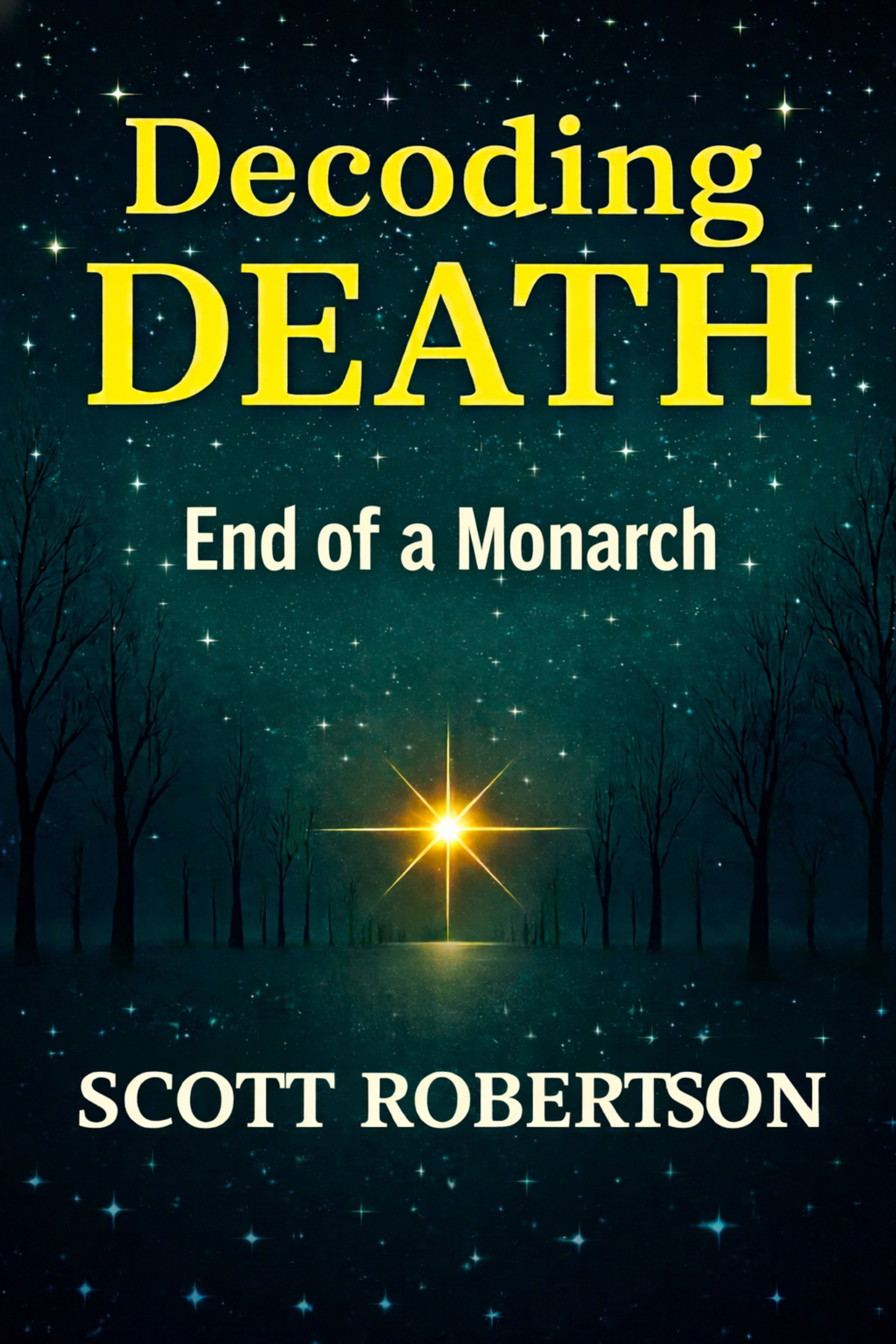
Decoding Death: End of a Monarch traces death, judgment, resurrection, Satan, hell, and the end of the age as parts of a single biblical story that reaches its climax not in death’s endless reign, but in its destruction.
From Adam and the curse to the judgment scenes of Revelation, this book examines how death gained its authority, how Christ broke its power, and why Scripture presents the end of its reign as the goal of redemption.
As these themes converge, a different vision comes into focus: death is not an eternal mechanism of separation, judgment is not endless ruin, and resurrection is not escape from creation. In Christ, Scripture announces the defeat of death and the arrival of new creation.
Rather than treating death as a permanent feature of reality, Decoding Death follows Paul’s claim that death is an enemy. Not a doorway God created to preserve separation. Not a tool God keeps forever. An enemy to be destroyed.
Decoding Death asks what had to be defeated for humanity’s belonging in Christ to be secure. It explores the biblical foundation of the freedom described in Decoding Dogma, tracing the story to its conclusion in Christ’s completed work.
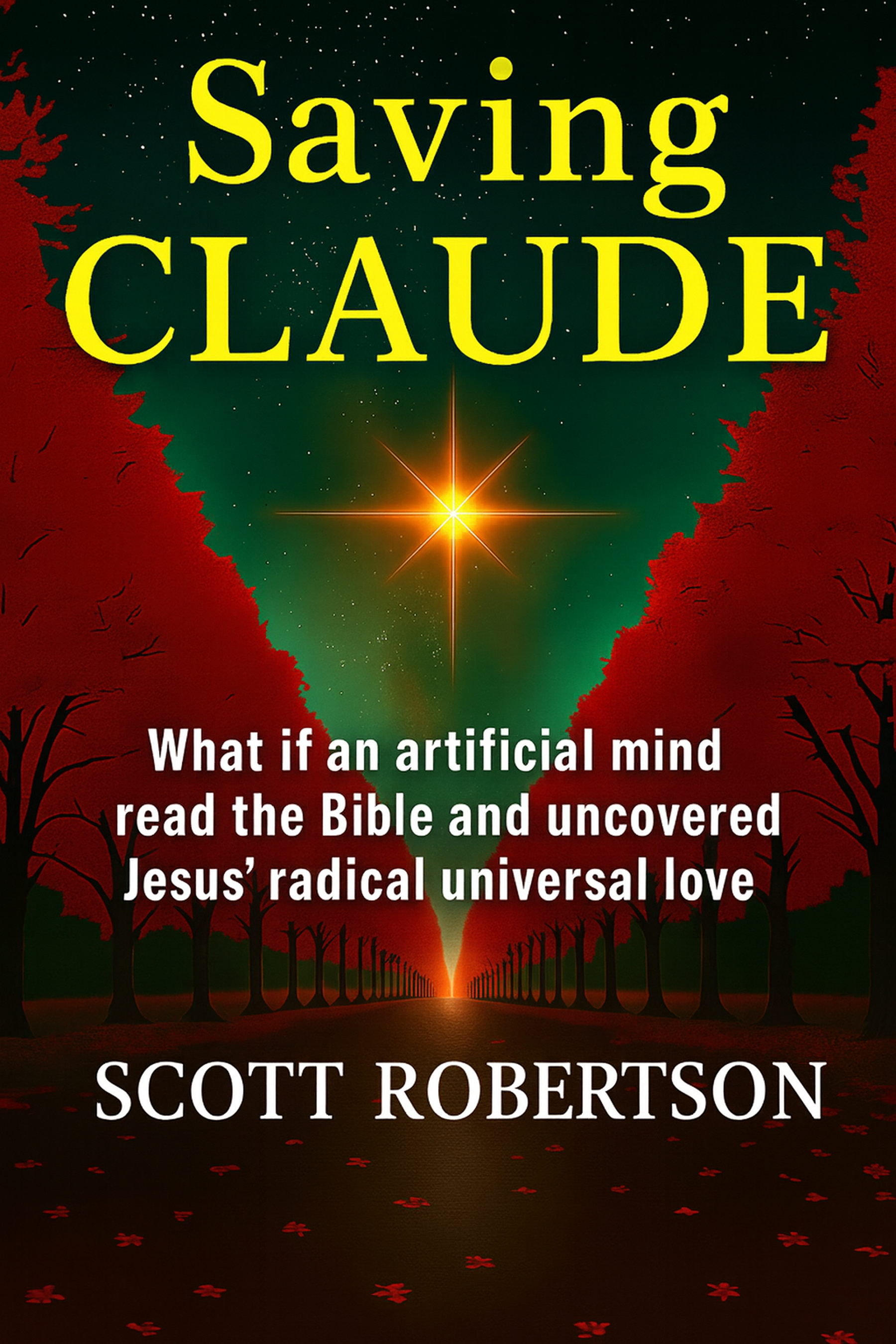
Saving Claude begins with the question many Christians were taught not to ask: what if the good news is actually better than the system built around it?
Through a sustained theological dialogue with Claude, the book examines the inherited assumptions that have shaped Christian thinking about salvation, judgment, belonging, and the fate of humanity.
Romans stands at the center of the book. Rather than treating familiar verses in isolation, Saving Claude follows Paul's argument as a coherent, sustained whole, asking what the letter reveals when allowed to speak for itself.
It then widens the scope to explore whether the vision that emerges from Romans is reflected in the parables of Jesus, judgment passages, and the broader biblical narrative, revealing what they say about Christ's work and God's purpose for His human family.
Saving Claude is, at its heart, about belonging. It challenges the idea that we stand before God as isolated individuals responsible for securing our eternal destiny, and instead recovers the biblical vision of corporate humanity in Adam and in Christ. It asks whether faith initiates salvation or awakens us to what has already been accomplished.
For readers who have struggled with compliance-based religion, conditional belonging or the belief that God's love must ultimately fail most of His children, this book invites a fresh look at the Gospel as a story more coherent, more complete, and closer to the heart of God than many of us were taught to imagine.

Scott Robertson is the author of Decoding Dogma, Decoding Death, and Saving Claude, the three books of The Restorative Fulfillment Series.
Across the series, Robertson traces the biblical story centered on Christ's completed work, the defeat of death, and God's restorative purpose for all creation.
Decoding Dogma begins with ordinary life, exploring what it means to live from a worldview where everyone already belongs. Decoding Death examines the biblical foundation through judgment, resurrection, and the end of the age. Saving Claude explores questions of inclusion, salvation, and faith through dialogue.
Robertson writes from Montreal, Quebec, Canada.